
Subhas Chandra Bose: A Fearless Leader of India’s Freedom Struggle
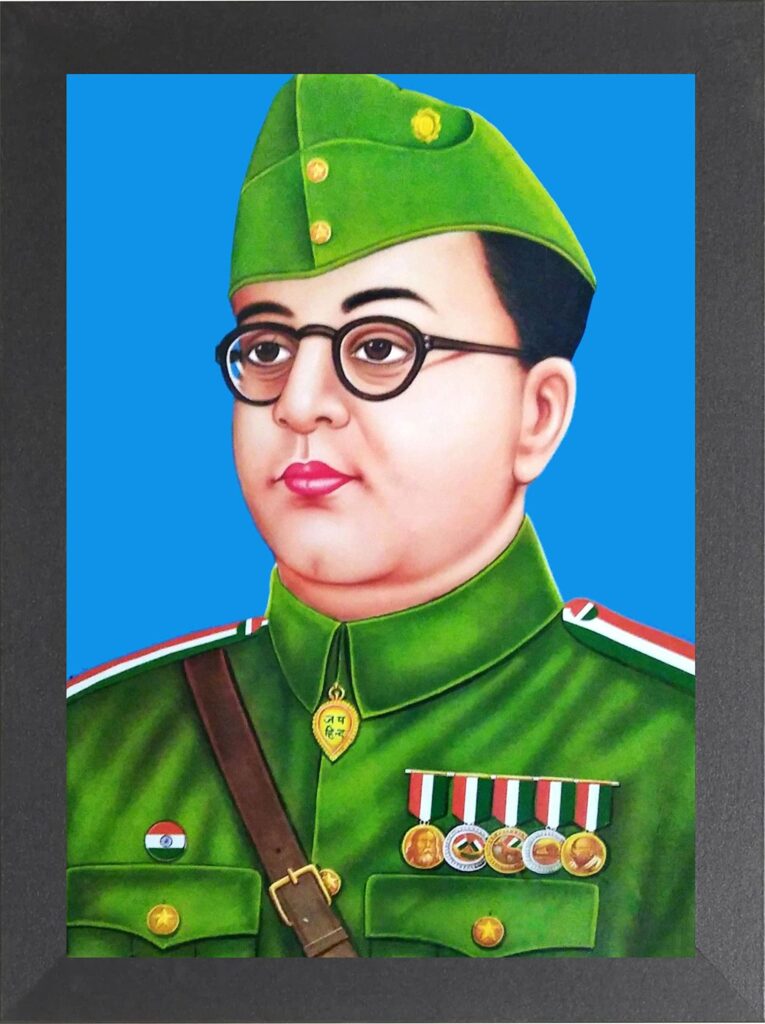
Subhas Chandra Bose was one of the most courageous and influential leaders of India’s struggle for independence. Known for his patriotism, determination, and revolutionary ideas, he inspired millions of Indians to fight against British rule. Popularly called Netaji, Subhas Chandra Bose believed that freedom was not given, but taken through sacrifice and strong action.
Early Life and Education
Subhas Chandra Bose was born on 23 January 1897 in Cuttack, Odisha, into a well-educated Bengali family. His father, Janakinath Bose, was a successful lawyer, and his mother, Prabhavati Devi, was a religious and disciplined woman. From a young age, Bose showed signs of intelligence, discipline, and leadership.
He completed his schooling in Cuttack and later went to Presidency College, Calcutta, where he was deeply influenced by Indian culture and nationalism. He later studied at Cambridge University in England and passed the prestigious Indian Civil Services (ICS) examination in 1920. However, instead of accepting a high-ranking job under the British government, he resigned to serve his motherland. This decision showed his deep commitment to India’s freedom.
Role in the Freedom Movement
After returning to India, Subhas Chandra Bose joined the Indian National Congress and worked closely with leaders like Chittaranjan Das. He quickly rose in popularity due to his bold thinking and powerful speeches. Bose believed that complete independence could only be achieved through strong resistance, unlike Mahatma Gandhi’s philosophy of non-violence.
He was elected President of the Indian National Congress in 1938 and again in 1939. However, ideological differences with other leaders led to his resignation. He then formed the Forward Bloc to unite all radical nationalist forces.
Formation of the Indian National Army (INA)
One of the most remarkable contributions of Subhas Chandra Bose was the formation of the Indian National Army (Azad Hind Fauj). During World War II, he traveled to Germany and later to Japan to seek international support for India’s independence. With the help of Indian soldiers and expatriates in Southeast Asia, he reorganized the INA.
His famous slogans like “Give me blood, and I will give you freedom” and “Jai Hind” became symbols of national pride and courage. Under his leadership, the INA fought bravely against British forces in regions like Imphal and Kohima.
Mysterious Death and Legacy
Subhas Chandra Bose reportedly died in a plane crash on 18 August 1945 in Taiwan, though the circumstances of his death remain a mystery and are still debated. Despite this, his contribution to India’s freedom struggle remains unforgettable.
Netaji’s life was a symbol of sacrifice, discipline, and fearless leadership. He showed that true patriotism demands courage and selflessness. Today, he is remembered as one of the greatest freedom fighters of India, and his ideals continue to inspire the youth of the nation.
Conclusion
Subhas Chandra Bose was not just a leader, but a revolutionary who dedicated his entire life to the cause of India’s independence. His unwavering determination, strong leadership, and love for the nation make him a timeless hero in Indian history. India will always remember Netaji Subhas Chandra Bose with respect and pride.