
Iron Man of India: Sardar Vallabhbhai Patel and His Contribution to the Nation
Sardar Vallabhbhai Patel, popularly known as the Iron Man of India, was one of the greatest leaders in Indian history. His strong will, firm decisions, and dedication to national unity played a crucial role in shaping modern India. While India remembers many freedom fighters, Sardar Patel’s contribution stands out for his unmatched role in uniting the country after independence.
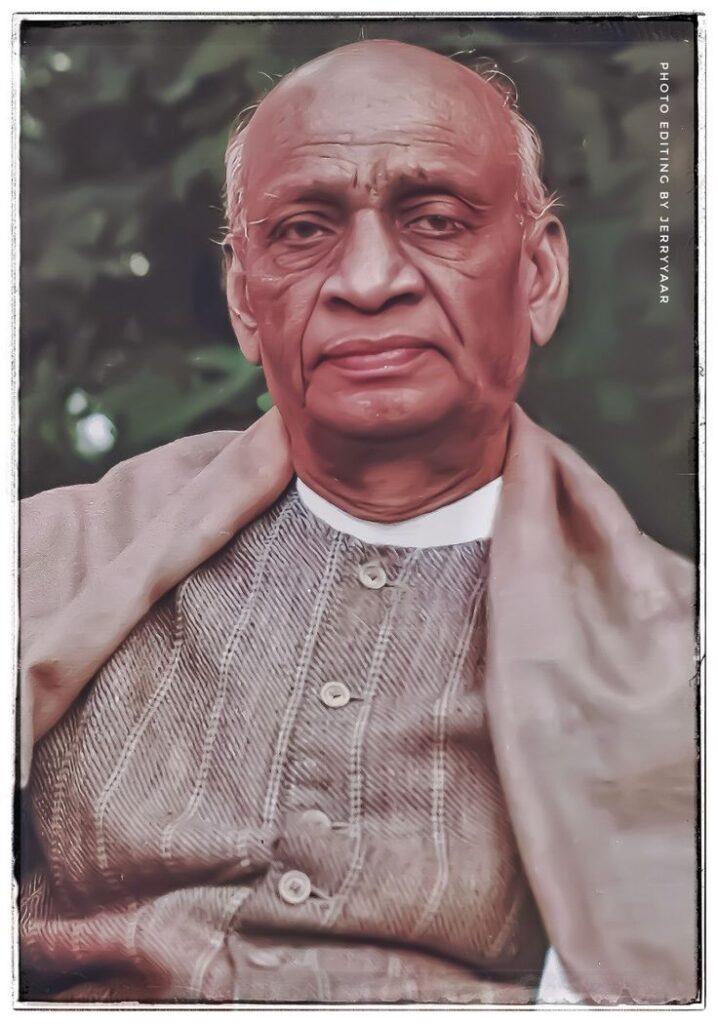
Early Life and Background
Sardar Vallabhbhai Patel was born on 31 October 1875 in Nadiad, Gujarat. He came from a simple farming family and worked hard to become a successful lawyer. His disciplined life, honesty, and leadership qualities made him a respected figure even before he entered politics.
Inspired by Mahatma Gandhi, Patel joined the Indian freedom struggle and soon became one of the most trusted leaders of the Indian National Congress.
Role in India’s Freedom Struggle
Sardar Patel actively participated in major movements like the Non-Cooperation Movement, Civil Disobedience Movement, and Quit India Movement. He played a leading role in the Bardoli Satyagraha (1928), where he successfully led farmers against unfair land taxes imposed by the British. His victory in Bardoli earned him the title “Sardar”, meaning leader.
Unification of India – His Greatest Contribution
After independence in 1947, India was divided into more than 560 princely states. These states had the option to join India, Pakistan, or remain independent. This situation posed a serious threat to India’s unity.
As India’s first Deputy Prime Minister and Home Minister, Sardar Patel took on this challenging task. Through diplomacy, persuasion, and firm action, he successfully integrated almost all princely states into the Indian Union. His decisive handling of states like Hyderabad, Junagadh, and Kashmir ensured the territorial integrity of India.
Without Sardar Patel’s efforts, India might have remained divided into many small regions. This is why he is rightly called the Iron Man of India.
Architect of a Strong Administrative System
Sardar Patel also played a key role in building India’s administrative framework. He strongly supported the creation of All India Services, especially the Indian Administrative Service (IAS) and Indian Police Service (IPS). He believed these services were essential for maintaining unity, law, and discipline in a newly independent nation.
Leadership Qualities and Ideals
Sardar Patel was known for his firmness, honesty, simplicity, and practical thinking. He believed in unity, discipline, and national interest above personal gain. Unlike many leaders, he preferred action over words and made tough decisions when necessary.
Statue of Unity – A Symbol of His Legacy
To honor his contribution, the Statue of Unity, the world’s tallest statue, was built in Gujarat. It stands as a symbol of national unity and reminds future generations of Sardar Patel’s invaluable service to India.
Conclusion
Sardar Vallabhbhai Patel’s contribution to India goes far beyond politics. He transformed a fragmented land into a strong, united nation. His leadership, vision, and determination laid the foundation of modern India. Even today, his life teaches us the importance of unity, courage, and selfless service to the nation.
Sardar Patel will always be remembered as the Iron Man of India, whose strength held of the nation together.