
A Leader of Courage, Vision, and Unbreakable Willpower
Indira Gandhi was born on 19 November 1917 in Allahabad, into a respected political family. Her father, Pandit Jawaharlal Nehru, was the first Prime Minister of India, and her mother, Kamala Nehru, was a freedom fighter. Being raised in a political atmosphere, she learned discipline, leadership, and national commitment at an early age.
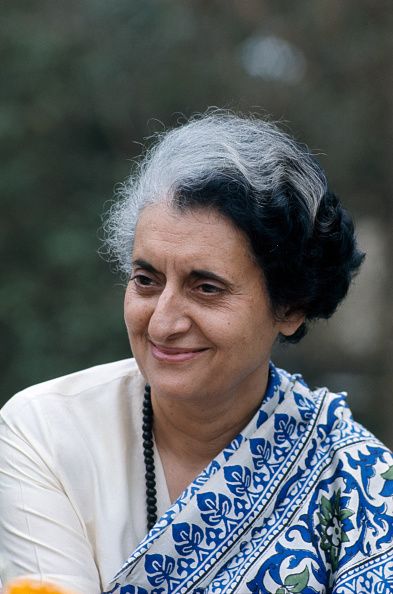
She studied at Shantiniketan under Rabindranath Tagore, and later continued her education in Switzerland and the University of Oxford, England. Her exposure to global society helped shape her sharp mind and strong personality.
Beginning of Political Journey
Indira Gandhi actively participated in the Indian freedom struggle, joining the Quit India Movement (1942). After independence, she worked closely with her father and became the President of the Indian National Congress in 1959.
After the death of Lal Bahadur Shastri in 1966, she became the Prime Minister of India, becoming the first and only woman to hold the position.
Leadership and Powerful Decisions
During her tenure, she made several bold decisions that shaped the future of India:
1. Victory in the 1971 Indo-Pakistan War
Indira Gandhi’s leadership during the 1971 war led to the creation of Bangladesh. The Indian military achieved a historic victory, with more than 93,000 Pakistani soldiers surrendering. This victory made her globally respected and earned her the title “The Iron Lady of India.”
2. The Green Revolution
To fight food shortage and hunger, Indira Gandhi introduced and promoted advanced farming techniques, hybrid seeds, and irrigation systems. This Green Revolution transformed India from a food-deficient nation to a self-sufficient agricultural country.
3. Nationalization of Banks
In 1969, she nationalized 14 major banks to ensure that banking benefits reached common citizens, farmers, and small industries. This move strengthened the Indian economy and reduced financial inequality.
4. Pokhran Nuclear Test (1974)
Under her leadership, India conducted its first successful nuclear test at Pokhran, giving India a powerful identity on the world stage while maintaining peace and national security.
Controversies and Challenges
Indira Gandhi’s rule was also marked by criticism and challenges:
- The Emergency (1975-77), a period when civil rights were restricted, remains one of the most debated phases in Indian democratic history.
- She faced strong political opposition, public protests, and legal battles.
- Despite intense pressure, she returned to power in 1980, proving her political strength and public influence.
Assassination and Legacy
On 31 October 1984, she was assassinated by her own bodyguards. Her death shocked the entire nation and created a wave of sorrow across the world.
Even today, she is remembered as:
- A fearless leader
- A symbol of women empowerment
- An architect of modern India
- One of the greatest prime ministers in Indian history
Her life continues to inspire millions of young Indians, especially women, to take leadership roles without fear.
🏁 Conclusion
Shreemati Indira Gandhi was more than a politician—she was a visionary leader, a strong woman, and a true patriot. Her bold decisions, courageous leadership, and dedication to nation-building have left a permanent mark on Indian history. She proved that a woman can lead a country with strength, intelligence, and determination, changing the destiny of a nation.
✍️ Inspiration
“Forgiveness is a virtue of the brave.” – Indira Gandhi
Her voice and actions still echo in the hearts of millions.